
These are the central questions in the research area now being strengthened at Dalarna University through the appointment of a new professor of physiotherapy.
How do we learn to move efficiently? How do repetitive strain injuries occur – and how can training and treatment best prevent them and be used in rehabilitation? These are the central questions in the research area now being strengthened at Dalarna University through the appointment of a new professor of physiotherapy.
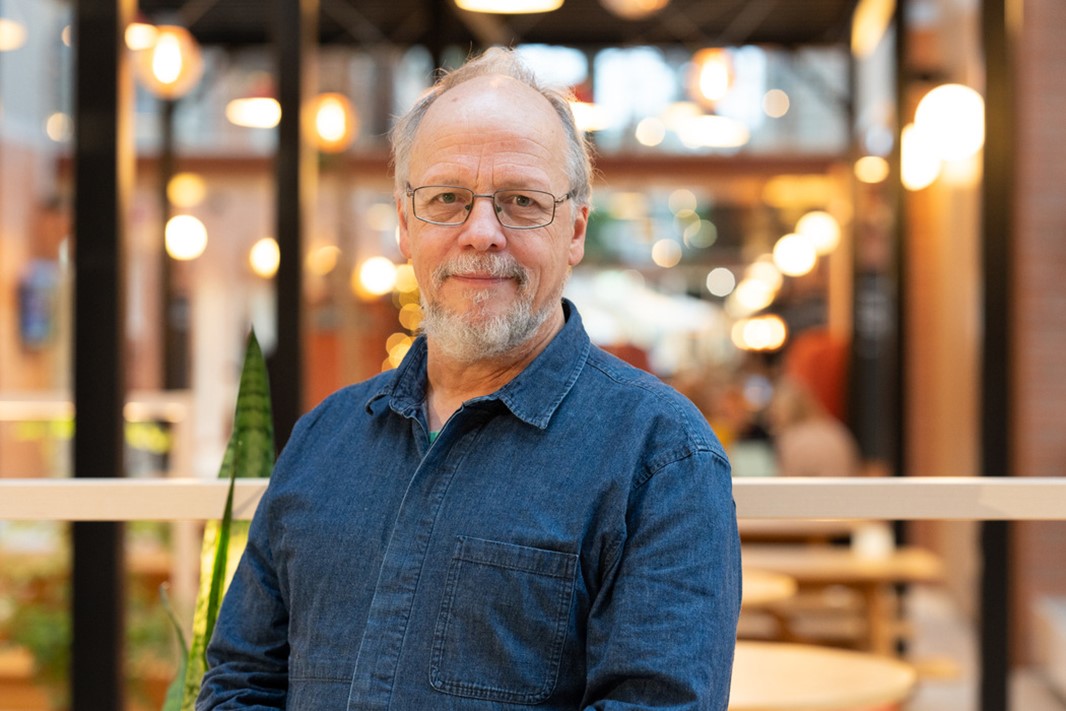
The university recently welcomed Wim Grooten as its new professor of physiotherapy. In this role, he will be responsible for the subject of physiotherapy, while supervising students in the master’s programme and contributing to the development of a new undergraduate programme in the subject. In addition, he will form part of a newly formed research group.
“Becoming a professor and having the opportunity to lead research and education in physiotherapy means a great deal to me. I also hope that Dalarna University can benefit from my pedagogical experience,” he says.
Wim joins the university from Karolinska Institutet, where he worked for approximately 30 years. There, he taught at the undergraduate, graduate, and doctoral levels in biomechanics, training, ergonomics, movement analysis, and academic writing. In 2006, he completed his PhD with a dissertation relating to public health that focused on ergonomics. He then became an associate professor in 2011 and has supervised several doctoral students.
Research on movement and rehabilitation
Wim’s research is rooted in human movement science. His goal is to understand how movements are learned, how physical load affects the body during work and exercise, and how training can be used for prevention and rehabilitation of injuries and diseases within neurology, orthopaedics, and geriatrics.
His research primarily uses biomechanical measurement and analysis methods such as video analysis, various motion‑capture techniques, sensors (IMUs), accelerometers, electromyography, and force measurements. He also has expertise in epidemiological methods and has authored several systematic reviews and meta-analyses.
“What drives me is curiosity and the opportunity to question previous explanatory models, to find new paths and new collaborations. Contributing new knowledge is simply enriching for the soul,” Wim says.
In addition to individual-level studies, he also works with broader public health perspectives on musculoskeletal disorders in society. For example, he is currently supervising a doctoral student studying the effects of different treatment methods for long‑term back pain.
New physiotherapy programme under development
Dalarna University currently offers a master’s programme in physiotherapy and is now working to expand its courses and programmes by launching a three-year bachelor’s programme in the field. As professor, Wim is involved in designing and creating the planned programme.
“If everything goes as planned, we should receive approval just before the summer and can then begin recruiting teachers and clinical supervisors. The goal is to start the programme in spring 2027,” he says.
Increasing students’ research competence
In the educational setting, Wim is particularly looking forward to supporting master’s students who write structured literature reviews.
“With my experience in pain research, literature reviews, and the biopsychosocial model, I can contribute both methodologically and through supervision. I hope to help students structure their projects, work with statistics, and successfully complete their studies,” he says.
